
Jesus Frees Us to Experiment in Ministry
THE SHOCK ABSORBER
You wake up in a third-world jail cell. You don't know what you've been arrested for. Someone slips a mobile phone under the door and tells you that you get one phone call.
Who are you calling to get you out?
According to George Mack, the person you'd call has something. A spark. A bias toward action. An ability to solve problems when everyone else is stuck. That something is high agency. Using his essay, Joel, Tim and Stu recently explored what could be holding churches back when it come to new ideas in ministry.
The Church's Reluctance to Experiment
Why are Christians often reluctant to try new things? The answer comes from a good place.
As an Anglican church, Soul Revival Church sees the God’s word as the central authority to all that it does and stands on other Christians’ work to ensure it’s ministry does not stray from scripture. Over the years, that's manifested in a healthy conservatism which allows the church to experiment in ministry but within the guardrails that the Bible maintains.
However there is also pragmatism. When many churches adopted the Homogeneous Unit Principle in the 1970s, it became a once-and-forever change in a lot of people's thinking. Almost a '“This is how you do ministry now”. Such a settled conviction bleeds into practice, causing churches to be resistant to experimentation.
The critical distinction is: conservative theology is entirely appropriate. The problem is when theological conservatism bleeds into strategic and practical conservatism, preventing churches from trying bold new approaches to spread the gospel.
Chesterton's Fence: Don't Blow Things Up Without Understanding Why
The Reformation itself was about going back to original sources—finding out what they actually said and living in light of that truth. It's a deeply conservative position: staying anchored to scripture as the basis for everything we do as Christians.
When it comes to change, Chesterton's Fence helps to think about why things exist. When building a new road through a field, you come across a fence. The progressive mindset says, "That's in my way. Let's get rid of it." The conservative mindset says, "That's interesting. It's probably here for a reason. Let's find out what that reason is first." If the fence was put there for a herd of pigs that died 200 years ago and no longer serves a purpose, fine—now you can dismantle it. But you investigate first.
The same can apply to church practice. As an example, Soul Revival hasn't blown up age-specialist ministries just because intergenerational ministry is a new idea. The question is: what's good about age-specialist ministry? What might be some of the shadows? How do we continue practicing the benefits while supplementing with intergenerational practice?
One way to ask the right questions is through the Pastoral Ministry Cycle: What's going on? Why is this going on? What ought to be going on? What should now be going on?
And critically, "what ought to be going on" is where Christians go back to the Bible. What does God's Word say? From there we can process out from that eternal Word how to respond to the new current situation.
Conservative Theology Frees Us to Experiment
Soul Revival’s ministry framework of Theology, Strategy, Practice helps to maintain that the things that shouldn’t change and points us towards what can be changed.
Theology: Conservative. Anchored. Not up for experimentation.
Strategy: Context-dependent. What works in one place might not work in another.
Practice: Flexible. This is where Christians can experiment, try new things, and take risks.
We do not experiment with the gospel. The place for experimentation is examining how to communicate the gospel in new contexts. Strong theological convictions and the guardrails of scripture free us up in ministry to take risks in practice rather than restrict you.
Five Low Agency Traps That Kill Innovation
George Mack's essay on high agency outlines five traps that keep people stuck. We had a fun experiment of our own in applying it to church leadership and ministry.
1. The Vague Trap: Captured by Problems Instead of Solutions
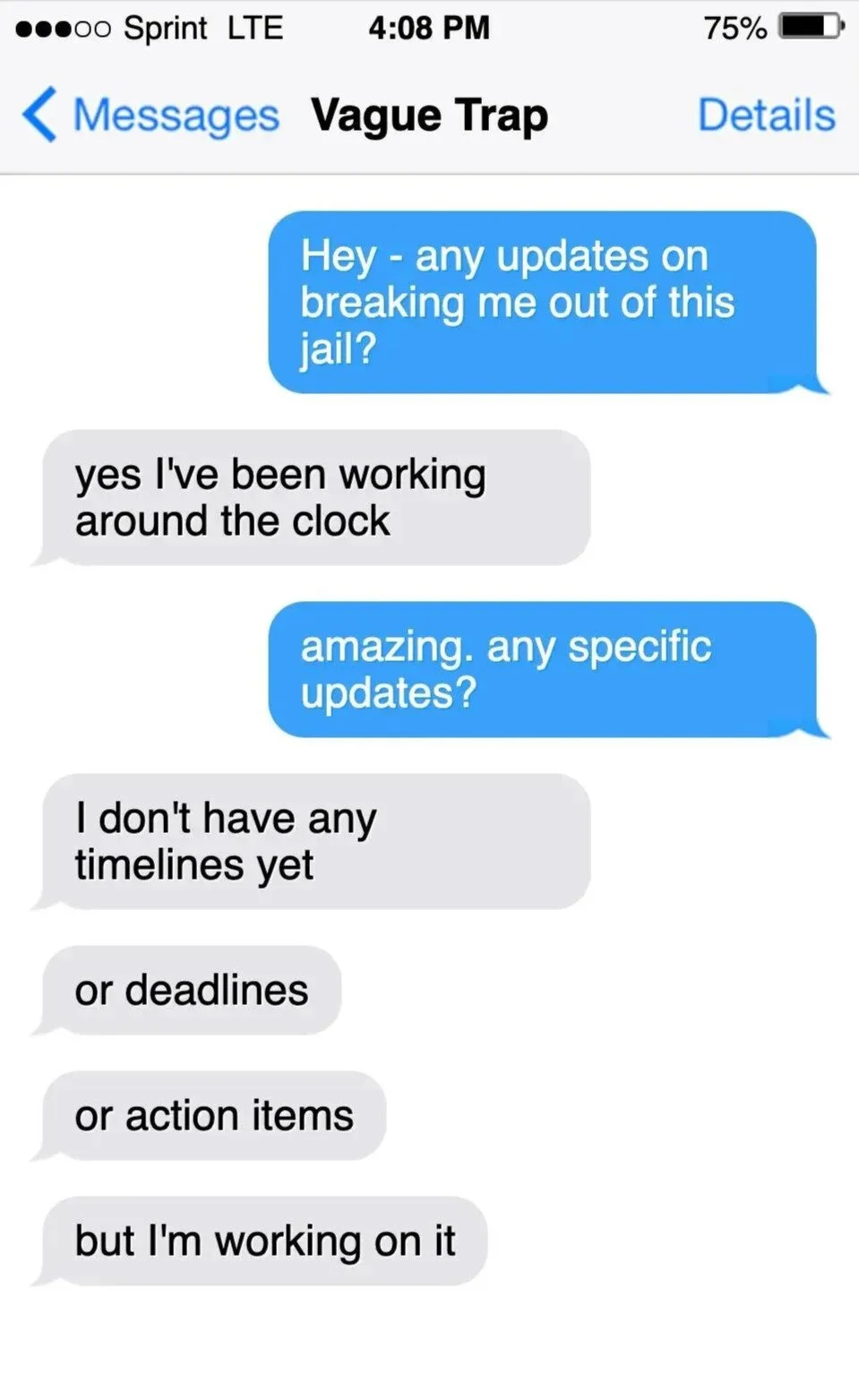
The vague trap means having no clear metrics, no target, just busy work without direction.
How do you know if you're being effective? For many churches, it's bums on seats and money in the plate, default metrics that are easy to count. But there's a right sense that those metrics aren't actually raising disciples who know, love, and obey Jesus. Without knowing what to measure, churches stumble around trying to vibe it. "We think kids are growing as Christians…maybe."
Without a target, it’s difficult to measure any form of progress. And the wrong metric leads to wrong solutions. If bums on seats is your metric, you'll be tempted toward seeker-sensitive approaches, doing whatever it takes to get more people, which can push towards unfaithfulness.
A good idea starts with clarity. Orville and Wilbur Wright wanted to fly. If they weren't flying, they weren't going to rest. High agency means being solution-focused, not problem-captured.
2. The Midwit Trap: Overcomplicating Everything
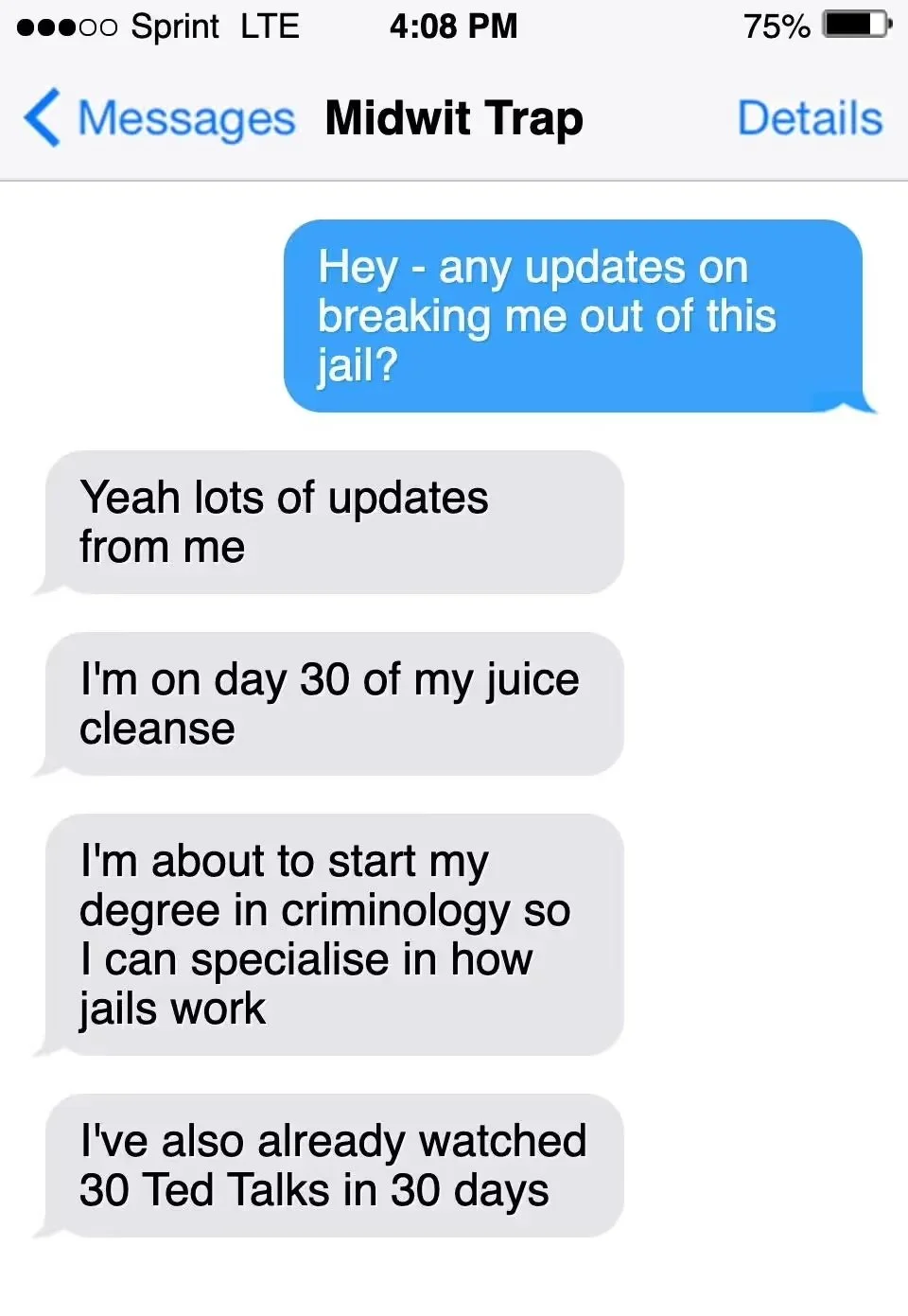
The midwit trap is focusing on so many ideas that no one thing in particular becomes a focus. Researching the perfect keyboard instead of writing. Taking a criminology degree instead of breaking someone out of jail. Having so many ministries they end up cross-purposing or competing with one another rather than working together for the gospel.
The benefit of working in a team with different personalities is huge. Some people want 95% certainty before acting. Others see a 5% chance of success and go all in. Both need each other.

3. The Attachment Trap: Stuck on Ideas Without Knowing Why

The attachment trap means being committed to something that's not working anymore but being unwilling to change. The Homogeneous Unit Principle can be one such example - a once-helpful strategy that became so entrenched people forgot why it was there in the first place.
Churches train really hard to be good at something. Then when it doesn't seem as effective as it once was, they find it difficult to change. One minister moves churches every 5 years because he's a one-trick pony. He knows how to do one thing. It only brings benefit for 5 years. Then he moves on and does it again.
The principle: don't get so committed to something that's not working that you're not willing to change. There are theological anchors that should remain, but as a result we can delve into the many different ways we can express our practice.
Preaching is one, the gospel must be preached. But we can also sometimes experiment with how we present it. The 30-minute monologue sermon has a particular history, but is it a trap to think it's the only form of faithful discipleship?
Mack’s essay outlines the escape route for such a trap. Ask yourself: What would I do if I had 10 times the agency to change it? If nothing mattered and you had unlimited ability, what would you do?
4. The Rumination Trap: Frozen by "What If" Loops

The rumination trap involves being stuck in a never-ending "what if something goes wrong?" loop. It's fear of failure and often wanting 100% certainty before acting.
Personality plays a role here. Some (like Joel) don't want to start something unless they can see where it's going to finish. They think through everything that could go wrong and if something unexpected happens, they panic because they hadn't planned for it.
Mack suggests reframing decisions as experiments. Instead of ruminating for five years about whether to move cities, recognise you're 60% certain it's better and book the tickets. Run the experiment. In five years of theoretical rumination, you could have collected practical living data in several cities.
Soul Revival’s approach to experimentation looks like: build a bridge to a new reality. If the new reality doesn't work, you can always come back across the bridge to the current reality.
Saturday night began as the core ministry. New experiments could be made as long as they didn't blow up Saturday night. If it worked, great, Saturday night could support it. If it didn't work, people weren't hurt. There was a bridge back what was already there.
Another good way to experiment is what Sun Tzu said: Don't attack unless you have 75% likelihood of success. We don't have to be completely idealistic and crazy, but measure the risk and if it’s a 75% likelihood you’ll succeed, that's reason enough to go ahead.
But in some situations you just have to take the leap. When Soul Revival started, there was no risk management or bridges. No money, no place to meet, no launch team. Just a question: why not?
If you're willing to fail, it's not as risky a step to take. The rumination trap is often fear of failure or pride: "I don't want to look like a failure." But if you don't care what people think and you're willing to have a go for something bigger than yourself - the gospel and people becoming Christians, you can take that leap into the dark.
5. The Overwhelm Trap: Paralysed by Too Many Options

The overwhelm trap is staring at a task so big you don't know where to begin, so you do nothing. Or you're so committed to so many things that the hour you could give to one thing feels like an hour stolen from something else.
The escape route: What is the smallest first step that can be taken?
Just getting started, putting some words on the page, sending one text instead of calling the whole list can break the paralysis. Getting going is the hardest part.
Part of escaping overwhelm is clearing out possibilities. Getting things off the to-do list. Being okay not being fully caught up. Making conscious decisions to not be up to date with everything.
You have to be okay not doing 99.9% of the things you could be doing. Be confident in the decisions you've made to do the thing you've said you're going to do, and do it well.
Three thoughts on overwhelm:
Trust God. He is good.
Don't make a bad situation worse.
What's one little thing I can do to make it better?
Sometimes the best thing you can do is walk away. Do something different. Often that gives you the headspace to think. The solution might come the next day in the shower.
To be in Christ is Agency
The Holy Spirit helps us mature in Christ. We're being sanctified to be more like Christ. And Christ had very high agency. The closer we come to Jesus, the more we become active Christians, not sedentary Christians.
To be in Christ is agency. It's expressing the newness Jesus gives us in our generation and so the Holy Spirit gives us agency and confidence to express the gospel in new ways.
But here's the critical balance: the parable of the talents reminds us we all have different abilities, life stages, and capacities. The point is to be faithful and express that agency in what you've been given.
In their letters, Paul and Peter constantly say: live a quiet, faithful life. Aspire to live quietly. Live good lives among your neighbours.
We can be tricked into equating high agency with our cultural definitions of success - wealth, productivity, achievement. The Bible keeps drawing us back to something simpler: be loving, joyful, peaceful, patient, kind, good. Displaying the Beatitudes. Being the best neighbour, parent, child, spouse, friend you can be.
There is an agency that comes with knowing, loving, and obeying King Jesus. But we must disentangle that from cultural trappings of success.
The Guardrails That Set Us Free
A strong, conservative theology is what can free us up for bold practice as we preach the gospel. Within the guardrails of scripture, we are freed to experiment with how we communicate truth, structure ministry, and reach people for Jesus.
Do not experimenting with the gospel, but experiment with practice. High agency as Christians doesn't mean reckless innovation. It means building bridges to new realities. Measuring risk with the 75% rule. Being willing to book the tickets and run the experiment and trusting God in the process.
Listen to the full Shock Absorber episode on high agency, low agency traps, and how the gospel frees us to experiment in ministry.
Read the essay that inspired this conversation: highagency.com
Also discussed on this episode:
Soul Revival Church is an Anglican church in the Sutherland Shire and Ryde.